TL;DR:
-
The FDA approved the first-ever prescription video game therapy for children with ADHD
-
Digital ADHD interventions provide more proven treatment choices beyond medication, offering personalized, engaging, and drug-free options.
-
Muse’s game-based neurofeedback training enhances attention regulation and emotional control, helping users build resilience and reduce distraction.
Attention Deficit Hyperactivity Disorder (ADHD) affects millions of children and adults worldwide. Conventional treatment often includes medications like stimulants, which can have side effects and are not suitable for everyone. In recent years, digital therapeutics and digital interventions have emerged as promising non-pharmacological alternatives and complements, offering new hope for improved focus and executive function. Amongst those is the first FDA-approved prescription video game therapy for children aged 8-17 with ADHD, EndeavorRx.
How does EndeavorRx help with ADHD?
EndeavorRx uses sensory stimuli and motor challenges to target areas of the brain that play a key role in attention function. Players are challenged to multitask and ignore distractions by navigating courses, collecting targets, and avoiding obstacles. Clinical trials involving over 600 children demonstrated meaningful improvements in attention, with about two-third of participants showing measurable gains after consistent use.

What does it mean for ADHD patients?
This approval means there are now more proven treatment choices available to help manage ADHD symptoms beyond traditional medication. Unlike traditional drugs, digital ADHD interventions like EndeavorRx provide a safe, drug-free intervention personalized to each patient’s cognitive profile.
What are digital ADHD interventions?
Digital ADHD interventions employ technology to help manage symptoms such as inattention, hyperactivity, and impulsivity through various tools like game-based therapy, neurofeedback, and virtual reality. These interventions provide engaging, non-pharmacological options that complement traditional treatment. Studies reveal digital therapies can reduce core ADHD symptoms, especially inattention, and improve executive functions and reaction times in pediatric populations.
How neurofeedback helps manage ADHD symptoms?
Neurofeedback helps manage ADHD by training individuals to self-regulate brain activity patterns linked to symptoms. It targets abnormal EEG patterns often seen in ADHD, such as increased theta waves and reduced beta waves, which correlate with inattention and impulsivity. During sessions, real-time brainwave feedback encourages the brain to increase beta activity and decrease theta activity. This operant conditioning promotes neuroplasticity, strengthens neural networks for attention, impulse control, and executive function.
Therapeutic sessions generally span 30-40 treatments, and outcomes can be comparable to stimulant medication but without side effects. While promising, neurofeedback is typically part of a comprehensive ADHD care plan. The sustained brain changes are supported by improved activation in attention-related brain areas and enhanced working memory and inhibitory control.
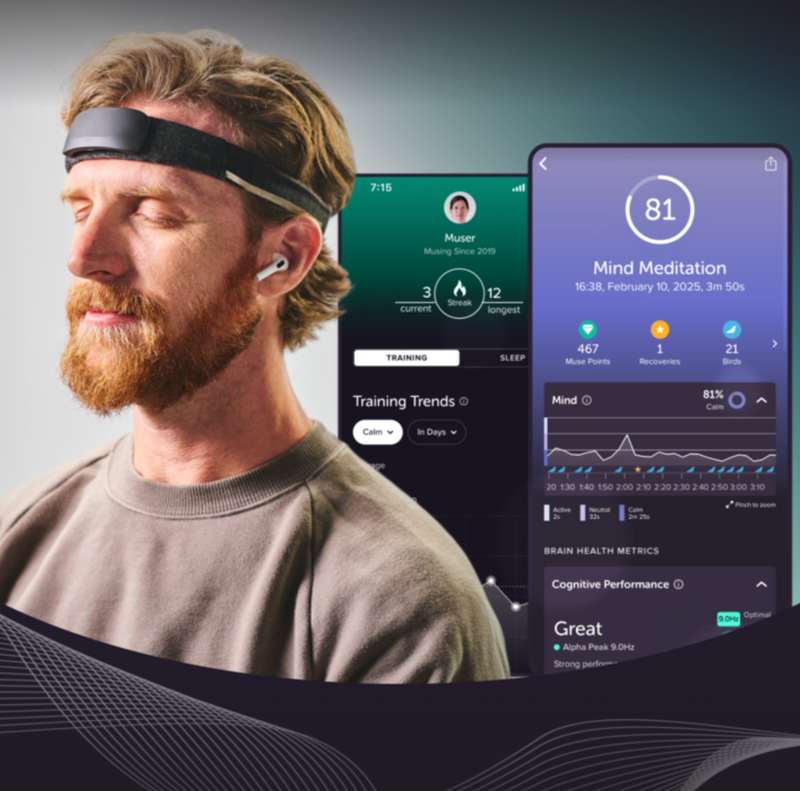
Good news is that Muse is bringing neurofeedback sessions to your home. While Muse is not an FDA-cleared medical treatment for ADHD, we are a drug-free, evidence-backed device that can help with improving focus and emotional regulation:
Muse S Athena is a clinical-grade neurofeedback wearable that offers real-time brain activity monitoring (EEG+fNIRS) to train focusGo to focus 1 and emotional regulation. Let’s dive into how Muse may help.

Muse’s game-based neurofeedback sessions enhance attention regulation, emotional control, and cognitive performance.
Muse headbands together with Muse’s owl game and mindfulness practices may help with ADHD by providing real-time neurofeedback training that helps users recognize and shift mental states, promoting sustained focus and resilience to distraction.
An early research conducted by the McGill University has shown that short-term neurofeedback training with Muse can reduce symptoms of inattention and hyperactivity in both adults and children with ADHD, improve cognitive tasks like reaction time, and enhance emotional wellbeing by modulating brain wave patterns such as the theta/beta ratio (a marker often dysregulated in ADHD). Importantly, Muse’s engaging approach and brief sessions contribute to higher adherence rates compared to traditional interventions.
On the other hand, Over 70% of regular users report improved emotional regulation, underscoring its potential as a complementary tool for ADHD management that integrates mindfulness and cognitive training.
User Tips
To optimize results, it is helpful to:
-
Commit to consistent, daily short sessions,
-
Use our new AI coach: Enso’s feedback to identify mental patterns,
-
Incorporate mindfulness practices alongside neurofeedback.
Muse is always here to aid and innovate, continuously evolving to provide cutting-edge support for your brain health journey.
Learn other ways to manage ADHD symptoms
Conclusion
The growing acceptance of digital therapeutics like EndeavorRx, combined with holistic tools like Muse, marks an exciting advancement for ADHD treatment. Together, they offer diversified, personalized, and engaging options that go beyond medication alone.
Interested in Muse? Ask our Muse guide Noa via our live chat at the right bottom corner, or get your Muse headband now!