Quick answer
Resistance training supports brain health by increasing BDNF and other neurotrophic factors, improving memory and executive function, reducing neuroinflammation, and preserving brain structure including hippocampal volume and white matter integrity.
Strength training is one of the most effective natural tools for reducing daily stress and building cognitive resilience
When people look for natural ways to relieve daily stress and protect long-term brain health, they often think of meditation, supplements, or cardio. But one of the most powerful and evidence-backed tools for calming the mind and strengthening cognition is actually resistance training.
On top of building muscle mass, strength training also challenges the nervous system, stimulates brain growth factors, improves emotional regulation, and builds mental resilience across the lifespan.
When combined with brain training tools like Muse, resistance training becomes part of a holistic, science-driven approach to brain health.
What is resistance training?
Resistance training, also known as strength or weight training, involves exercises that make muscles work against an external force (such as dumbbells, resistance bands, machines, or bodyweight) to improve muscle strength, endurance, and neuromuscular coordination.
Why resistance training matters for stress and brain fitness
Stress is beyond psychological. Chronic stress affects your body at a neurological level: affecting your attention, memory, emotional regulation, and decision-making. Resistance training acts as a controlled stressor that teaches the brain how to adapt, recover, and become more resilient over time.
Unlike passive stressors, strength training:
-
Improves stress tolerance
-
Enhances mood and emotional stability
-
Strengthens focus and cognitive control
-
Supports long-term brain resilience
This makes resistance exercise a foundational, non-pharmaceutical tool for managing daily stress naturally.

How resistance training improves cognitive function
A growing body of research shows that resistance training significantly improves global cognition, including:
-
Memory
-
Processing speed
-
Attention
-
Executive function (planning, inhibition, decision-making)
Meta-analyses of randomized controlled trials report that resistance training enhances cognitive performance across age groups, with especially strong benefits in older adults and people with mild cognitive impairment. Adults aged 65–75 often show the largest overall cognitive gains.
Compared with aerobic exercise, resistance training appears particularly effective for executive function and inhibitory control – skills closely tied to stress regulation and mental clarity.
How does resistance training affect the brain biologically?
Resistance training affects the brain through at least four biological pathways: increased neurotrophic factors (BDNF, IGF-1, VEGF), myokine release, reduced neuroinflammation, and improved cerebral blood flow.
-
Increased neurotrophic factors: Resistance exercise raises levels of BDNF, IGF-1, and VEGF – proteins that support neuron growth, synaptic strength, and neuroplasticity.
-
Myokine release from muscles: During strength training, muscles release signaling proteins called myokines (such as irisin and cathepsin B) that cross the blood–brain barrier and stimulate neural growth.
-
Reduced inflammation: Resistance training lowers inflammatory markers like TNF-α and IL-6 while increasing anti-inflammatory IL-10—important for stress resilience and brain aging.
-
Improved cerebral blood flow: Strength training enhances blood flow and oxygen delivery to the brain, supporting learning and memory.
Myokines are proteins released by muscles during exercise that communicate with the brain and help regulate inflammation, metabolism, and neural growth.
Neurotrophic factors are proteins that support neuron survival, growth, and the formation of new neural connections—essential for learning and memory.

Does resistance exercise change brain structure?
Yes, resistance training changes how your brain functions by changing its structure. Neuroimaging studies show that consistent resistance training is associated with:
-
Increased cortical thickness in regions linked to memory and executive function
-
Preservation of white matter integrity, which supports communication between brain regions
-
Protection of hippocampal areas involved in learning and memory
For example:
-
A 6-month randomized trial in adults with mild cognitive impairment found resistance training preserved white matter and memory.
-
Another study showed 12 weeks of resistance training increased parahippocampal cortical thickness by ~1.18% in high-risk individuals.
Cortical thickness refers to the thickness of the brain’s outer layer, which is linked to cognitive performance and declines with aging.
White matter integrity reflects the health of neural communication pathways critical for learning and attention.
How to plan resistance training for optimal brain benefits?
Brain benefits are strongest when resistance training is challenging, progressive, and consistent.
Evidence-based guidelines:
-
Frequency: 2–3 sessions per week
-
Duration: 30–60 minutes per session
-
Intensity: Moderate to vigorous
-
Program length: 12+ weeks for measurable cognitive gains
Pro tips:
-
Gradually increasing resistance or difficulty is key. More challenging programs produce stronger cognitive and neuroplastic benefits than unchallenging routines.
-
Combining resistance training with aerobic or coordination-based exercise may yield even greater cognitive and stress-regulation benefits.
Resistance training as a natural stress-relief tool
Resistance training is increasingly recognized as a first-line, natural strategy for reducing stress and anxiety. Clinical research shows it can:
-
Reduce symptoms of anxiety and depression
-
Improve emotional regulation
-
Enhance mood stability
-
Increase perceived stress resilience
Unlike supplements or over-the-counter remedies, strength training improves stress management by changing the brain’s underlying biology.
Complementary tools for brain training
While resistance training strengthens the brain indirectly through physical challenge, mental fitness tools help train the brain directly.
This is where Muse complements physical training.
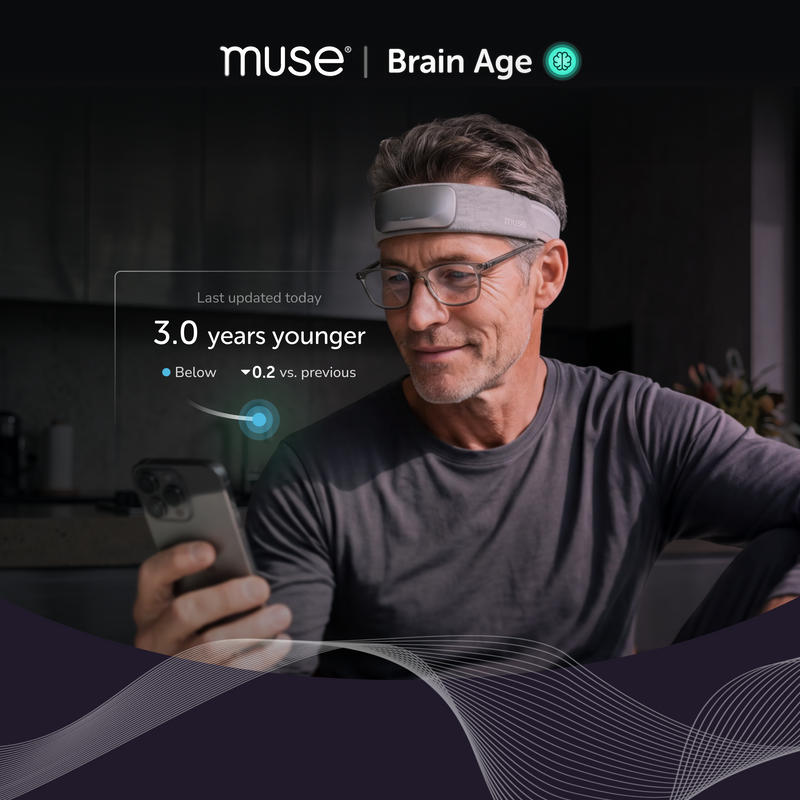
With real-time feedback, Muse S Athena helps with:
-
Focus & calm training (EEG): the headband measures brainwave patterns and the app’s soundscape changes as your attention wanders vs. stabilizes. That immediate feedback helps you practice returning to a focused, calm state – building control over time.
-
Cognitive endurance training (fNIRS / “Strength”): Athena measures changes in oxygenated blood flow in the prefrontal cortex during effort-based exercises (like the owl game). When you sustain mental effort, you get reinforcing feedback, which helps you build mental stamina.
-
Deeper recovery and better sleep:
-
Sleep Assist lures you into sleep and ease you back into sleep when you wake during the night. Users fall asleep 55% faster.
-
The new Deep Sleep Boost introduces AI and EEG cued pink noise to aid you into longer and consistent slow-wave sleep for better recovery throughout the night. Beta users gain 42% more slow-wave trains per minute.
A simple integrated routine:
-
Morning or midday: Resistance training session
-
Post-workout or evening: Muse’s focus/calm session or strength session
-
Night time: Muse’s sleep session with Sleep Assist and Deep Sleep Boost
While physical training stimulates growth signals like BDNF, Muse’s mental fitness training helps the brain learn how to use those signals effectively.
Build a stronger brain inside and out
Resistance training is one of the most effective, evidence-backed ways to support brain health.
But optimal brain health doesn’t come from physical training alone. Pairing resistance training with mental fitness tools like Muse S Athena allows you to train both sides of the equation: body and brain.
If you’re already investing in your physical strength, it’s time to train your brain with the same intention. Explore Muse and start building a stronger, more resilient mind, one session at a time.
What makes Muse S Athena different?
FAQs
Q: Does resistance training improve memory and executive function?
A: Yes. Studies show resistance training improves memory, attention, and executive functions, particularly in older adults and those at risk for cognitive decline.
Q: How often should I strength train for brain health?
A: Two to three sessions per week, 30-60 minutes each, at moderate to vigorous intensity is optimal.
Q: Who benefits most from resistance training?
Older adults experience the largest gains, but people of all ages benefit, especially those under chronic stress.
Q: How does resistance training compare to aerobic exercise?Resistance training excels at improving executive function and inhibitory control, while aerobic exercise supports overall brain aging and cardiovascular health.
Q: Can resistance training help prevent dementia or Alzheimer's disease?
Emerging research suggests that regular resistance training may reduce the risk of dementia and Alzheimer's disease by promoting neuroplasticity, reducing neuroinflammation, and improving cerebral blood flow.
Q: What are myokines and how do they affect the brain?
Myokines are signaling proteins released by muscle tissue during contraction, and they act as a biochemical bridge between your muscles and your brain. One of the most studied myokines, irisin, crosses the blood-brain barrier and stimulates the production of BDNF (brain-derived neurotrophic factor), a protein that supports neuron growth, learning, and memory. In short, every time you lift weights, your muscles send a cascade of neuroprotective signals that directly support cognitive function.
Q: Is resistance training better than cardio for brain health?
Both resistance training and cardio offer meaningful cognitive benefits, but they appear to work through different mechanisms. Cardio primarily boosts cerebral blood flow and cardiovascular efficiency, while resistance training excels at stimulating BDNF, myokine release, and hormonal responses that support neuroplasticity. Some research suggests that resistance training may have a slight edge for improving executive function and memory specifically, while aerobic exercise may be more effective for mood and anxiety reduction. The most brain-healthy approach is a combination of both, but if you can only choose one, resistance training is increasingly supported as the stronger option for long-term cognitive resilience.
Q: What is a holistic approach to brain health?
A holistic brain health routine combines physical activity, cognitive training, stress regulation, and quality sleep. Resistance training strengthens the brain indirectly through physical stress and neurochemical signals, while mental training practices build focus and emotional regulation. Wearables such as Muse S Athena support this approach by providing guided meditation, cognitive training, and sleep tools designed to improve recovery and mental resilience.
Q: Why is sleep important for the brain benefits of resistance training?
Many of the neurological benefits of resistance training occur during recovery, especially during deep sleep. During this stage, the brain consolidates learning, supports BDNF activity, and repairs neural connections. Improving sleep quality can therefore enhance the cognitive benefits of training. Sleep-support tools such as Muse S Athena use EEG-guided audio stimulation to reinforce slow-wave sleep, which plays a key role in memory and recovery.
Q: What tools can help train cognitive resilience alongside physical exercise?
Cognitive resilience improves when the brain is regularly challenged and given time to recover. In addition to resistance training and aerobic exercise, mental training practices such as meditation, focused attention exercises, and sleep optimization can strengthen stress regulation and executive function. Wearables like the Muse S Athena use realtime feedback to help users train focus, regulate stress, and support recovery through improved sleep.