TL;DR
-
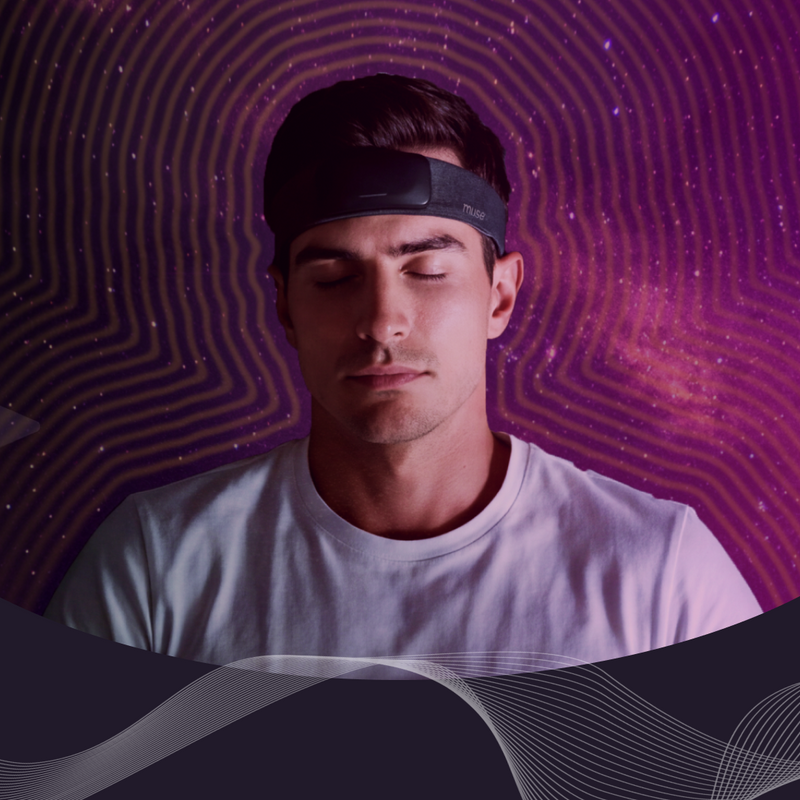
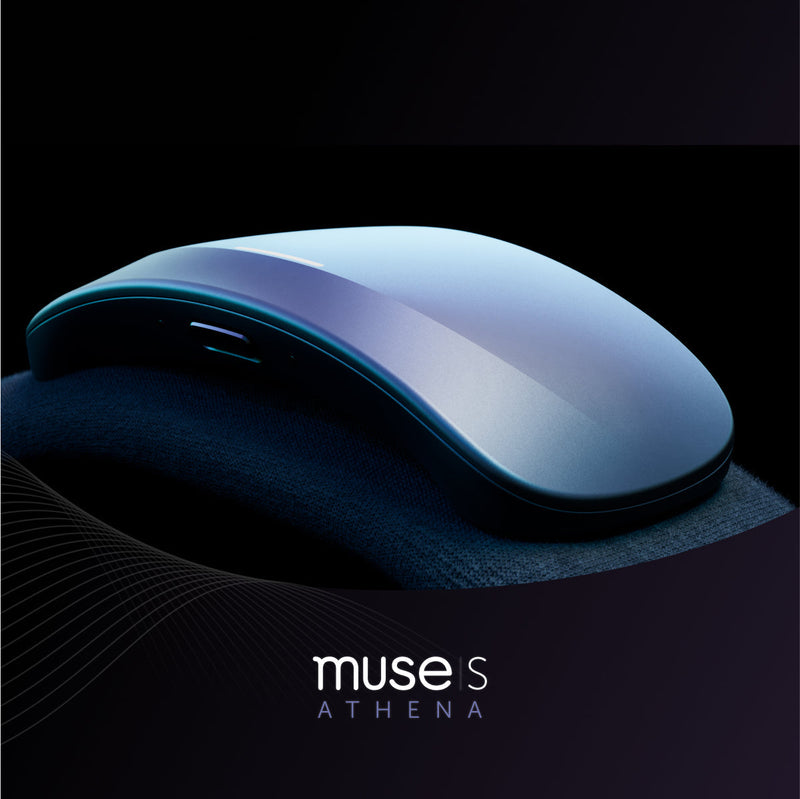
Muse S Athena reads your brain signals directly with EEG and fNIRS, not an estimate from your wrist like a ring or watch
-
The $474.99 headband works fully on its own: full sleep tracking, real-time sleep intervention (Sleep Assist, Deep Sleep Boost), and realtime brain training, no subscription required
-
Muse Premium ($55 for the first year, optional) adds Smart Wakeup, Dream Recall, Enso AI Coach, two more metrics, and a bigger content library on top of what's already there
-
Muse S Athnea’s sleep-stage accuracy is validated at 88 to 96% against polysomnography, the clinical sleep-lab standard
-
Over two years, Athena costs about the same as or less than devices that require a subscription just to work
-
We have a 30-day money-back guarantee, plus a 1-year warranty (2 years in the EU)
Muse S Athena is a headband that reads your brain's electrical activity directly while you meditate, train focus, or sleep, and uses that signal in real time to guide you toward calm, sharper focus, or better rest. The short answer on price: it works fully on its own for $474.99, no subscription required. A Premium subscription ($55 for the first year, $109.99/yr after year 1) is optional and adds AI coaching, wake-up features, and content on top, not core function. Here's the honest breakdown.
What is Muse actually measuring, and why is that worth paying for
Short answer: Muse reads brainwaves directly, and an algorithm trained on 1 billion minutes of brain data turns that signal into accurate realtime audio feedback and session results/session data (88 to 96% aligned to PSG for sleep stages). That accuracy is what makes realtime feedback possible in both training sessions and sleep. This is how Muse actually helps you build a calmer mind, stronger mental strength, and better recovery, for better brain health overall.
Most wearables, rings included, work from the wrist: heart rate, motion, temperature, inferring what your brain is probably doing. Muse reads the brain directly. EEG picks up the electrical activity your brain cells produce, and fNIRS tracks blood oxygen use in the frontal cortex, the part of your brain most involved in focus and mental effort. That's a different signal entirely from anything read off your wrist.
Raw brain signals aren't useful on their own. What makes them useful is the algorithm interpreting it. Our algorithm was developed and has been improving on our own library of over 1 billion minutes of real brain data, the largest EEG dataset of its kind.
That's what lets Muse tell drifting focus from locked-in focus, or catch the exact moment to act during sleep, validated at 88-96% accuracy against polysomnography, the clinical sleep-lab standard, across all sleep stages.
That combination, direct signal plus the algorithm, is what makes realtime feedback possible.
-
Training sessions: Muse reads your brain activity as it happens and gives you feedback in the moment, so you can shift your state while you're in it, not review it after the fact.
-
Sleep sessions: Realtime brain activity reading, powers our sleep intervention tool kit, ensuring you a better recovery at night, from falling asleep faster and sleeping deeper, to waking up less groggy (Smart Wakeup available with Premium)
Together these justify Athena's price: not the signals it reads alone, but the realtime intervention in both training and sleep, built on a proprietary algorithm and a scale of brain data nothing else in this category has.
What it actually costs over two years
Muse S Athena compared to other popular devices (updated 2026)
|
Device |
Cost |
Subscription |
Total (2 years) |
Brain-Signal Reading |
Realtime Feedback |
|
Muse S Athena + Premium |
$584.98 bundle (includes 1 year Premium) |
$55 for 1st year, $109.99 after year 1 |
$639.98 |
Yes (EEG + fNIRS) |
Yes (brain training, sleep + Smart Wakeup, Dream Recall) |
|
Muse S Athena |
$474.99 |
$0 required |
$474.99 |
Yes (EEG + fNIRS) |
Yes (brain training + sleep) |
|
Muse S Athena + Premium |
$584.98 bundle (includes 1 year Premium) |
$55 for 1st year, $109.99 after year 1 |
$639.98 |
Yes (EEG + fNIRS) |
Yes (brain training, sleep + Smart Wakeup, Dream Recall) |
|
Oura Ring 5 |
$399 - $499 |
$69.99/yr |
$649 |
No |
No |
|
Whoop |
$0 |
$199-$359*/yr, required to use device at all |
$398-$718* |
No |
No |
|
Apple Watch 11 |
$399 |
$0 |
$399 |
No |
No |
|
Mendi |
$299 |
$0 |
$299 |
fNIRS only |
Yes, brain training only (no sleep feature) |
*Whoop has two tiers of subscriptions
What's free vs what's Premium
Included with the headband, no subscription required:
-
Realtime EEG biofeedback for focus, calm, heart, and breath sessions
-
Full sleep tracking: sleep score, sleep stages, sleep position and heart rate
-
Sleep Assist: fades audio as you fall asleep and brings it back if you wake up mid-night
-
Deep Sleep Boost: EEG-timed pink noise cues during slow-wave sleep, supporting better recovery
-
Mental Strength Training: using the fNIRS sensor
-
Real-time brainwave visualization
Premium adds ($55 for 1st year, optional):
-
Smart Wakeup: times your alarm to your lightest sleep stage
-
Dream Recall (beta): times your wake-up around REM sleep to help you remember your dreams
-
Enso AI Coach: chats with you about your session data and suggests routines based on your goals
-
Cognitive Performance Scores: Alpha Peak and Brain Recharge: two longer-term cognitive metrics
-
500+ guided meditations and structured Programs
-
Pairing Muse with external audio apps
Without the Premium subscription, you still get full sleep tracking, real-time sleep intervention, and brain training. Subscribing adds Smart Wakeup, Dream Recall, Enso AI Coach, and a much larger content library on top of that. Premium makes the device do more. It doesn't unlock what the device already does.
Get Muse S Athena · Get Athena + Premium bundled · Add Muse Premium

Is Muse Premium worth it, or is the free version enough?
Yes, if you want to enhance an experience that's already complete without it.
Premium doesn't unlock recovery, calm, or focus. Those are already covered by the core experience. It adds more ways to work with what you're already getting: deeper metrics, a customized wakeup, and a bigger library to train with.
Metrics
|
Without Premium |
With Premium |
|
+ Alpha Peak + Brain Recharge + AI Coach: Enso |
Every core score is included free. Premium adds two more scores tracking brain performances, plus Enso, which turns all of it into a plain-language read on how you're doing and what to work on next.
Sleep
|
Without Premium |
With Premium |
|
+ Smart Wakeup + Dream Recall (beta) |
Tracking and realtime intervention are both included free. Premium adds two ways to customize your wakeup:
-
Smart Wakeup: waking you up at your lightest sleep for a clearer morning
-
Dream Recall: waking you up at REM sleep for better dream recall
Focus, calm, and mental strength training
|
Without Premium |
With Premium |
|
+ 500+ guided sessions + external audio pairing |
All core training is included free. Premium expands the content library and lets you pair Muse with outside audio apps for customized experiences.
Does Muse actually work? Here's the data, by category
Focus and attention
In a 90-day study of 45 participants with long COVID using a daily 10-minute Muse S neurofeedback session, attention and response control (measured by an objective test called Double Trouble) improved significantly after 90 days, alongside self-reported cognitive function scores improving from 39.1 to 42.5 (P < .001).
Recovery and sleep
-
Better recovery: In beta testing of Deep Sleep Boost, active nights showed roughly 24% longer slow-wave trains, 42% more slow-wave trains per minute, and 76% more slow waves occurring within organized trains, compared to sham nights. In short: more continuous, less fragmented deep sleep which enhances recovery.
-
Falling asleep faster: Sleep Assist is associated with a 55% faster time to fall asleep in internal data.
Cognitive performance
In an internal analysis of 189 users (ages 31–83, ~53,000 sessions over a year), people who trained in most weeks of the year were 40 to 50 milliseconds faster on a standard cognitive control test (the Stroop task) than people who trained more overall but sporadically, and this held at every age group.
Consistent practitioners in their 60s and 70s outperformed sporadic practitioners in their 30s and 40s.
Full breakdown in our data story blog →
Calm and stress
In a published pilot study of healthcare professionals using Muse S over 180 days (Ghosh et al., 2023, Journal of Primary Care & Community Health), 91.9% of participants reported feeling more relaxed after using the device, and burnout dropped by more than 54% in the subgroup who started the study already burned out (n=22).
What a clinic used to cost, in a headband
EEG neurofeedback wasn't always something you could do at home. Clinical neurofeedback still typically runs $75 to $300 per session, with a full program (20 to 40 sessions) commonly totaling $2,000 to $10,000 or more. The clinical-grade EEG systems clinics use to deliver it cost $10,000 to $25,000 and up, hardware most people will never own or need direct access to.
Sleep is a similar story. A single in-lab polysomnography, the gold-standard sleep study, typically costs $1,000 to $3,000, sometimes running as high as $10,000 at hospital-based sleep centers, and it's a one-time diagnostic snapshot, not something you'd repeat nightly. Muse tracks that same slow-wave activity every night, building a longitudinal picture from your own bed that a single lab visit can't.
Muse S Athena doesn't replace a clinical diagnosis, and it's not intended to. But the same category of signal, EEG for brain training, EEG-based sleep staging, that used to require a clinic visit and per-session or per-study fees is now available at home for a single $474.99 purchase, with no recurring cost to keep using it.
How long until I see results from Muse?
By four weeks of daily use, a peer-reviewed study found a 16% reduction in perceived stress, faster reaction times on a cognitive task, and measurable changes in resting brain activity, all significantly greater than a control group doing daily breathing exercises instead. The study followed 40 participants, split between the two groups, with measurements taken at the start, week two, and week four.
Results depend more on consistency than time. In an internal analysis of 189 users, people who trained in most weeks of the year outperformed people who trained more overall but sporadically, on a standard cognitive test, and this held at every age group. Showing up regularly matters more than how long you've owned the device.
For what that actually looks like over the long run, one of our users tracked his own brain data every day for 1,000 days straight. Read what changed →

Is Muse a medical device?
No, and it is not meant to be. Muse is a consumer wellness device for meditation, focus training, and sleep. It is not intended to diagnose, treat, cure, or prevent any condition, and it is not a substitute for medical care.
What it does have is peer-reviewed research behind it. Read more here.
Who can see my brain data?
Access to your data is limited to what's needed to support you, troubleshoot issues, or personalize your Muse experience. If you use Enso, it also draws on your EEG and fNIRS signals, session history, and your interactions with it to personalize its responses, under the same privacy policy that covers the rest of Muse. You can delete your account and all associated data at any time from Settings > Data Policy > Delete My Account in the app. Muse does not provide medical interpretation of your data or act as a substitute for a clinician. For full details, see our Privacy Policy.
Comfort and battery, honestly
Wearing sensors on your forehead overnight is a different experience than a ring or wristband, and that adjustment period is real for some people in the first week or two.
Battery-wise, Athena is built for nightly charging: 3 hours to a full charge, rated for a full night of sleep tracking on that charge. Daytime training sessions run shorter between charges since the fNIRS sensor draws more power. If you're coming from a device that goes several days per charge, this is a different rhythm, not a flaw hiding in the spec sheet.
The bottom line
Muse S Athena might cost more upfront than some wearables, and about the same or less than others once you count what they require you to keep paying. What sets the price is the signal it's reading and the realtime intervention: active sleep support as you sleep, and realtime neurofeedback for brain-training.
All of that is included in the $474.99 price, no subscription required. Premium is there if you want more on top of it: more insights on metrics, customized wake-up, a bigger library, but it's not what makes Muse worth having in the first place. That's already built in.
If you're weighing whether it's worth it, the real question will be whether you want a device that tracks your brain, or one that actively works with it.
FAQs
Q: Is the Muse S Athena worth $474.99?
A: Yes. The headband works fully on its own for $474.99, including realtime sleep intervention and brain training. A Premium subscription is optional and adds coaching, wake-timing features, and a bigger content library on top of that.
Q: Does Muse require a subscription?
A: No. Core features, including sleep tracking, realtime feedback sessions, Sleep Assist, Deep Sleep Boost, and Mental Strength Training, are included with the headband. Premium is optional.
Q: How is Muse S Athena different from a ring or smartwatch like Oura or Apple Watch?
A: Muse S Athena is a brain-based device: it reads your brain signal directly and uses it to provide realtime sleep support and realtime brain training. Rings and smartwatches are body-signal based: they infer sleep and stress from heart rate and motion, and are built mainly around activity tracking. That direct signal is what lets Muse act on your sleep and training as they happen, not just report on them afterward.
Q: What's the warranty and return policy?
A: Athena comes with a 30-day money-back guarantee and a 1-year limited warranty (2 years in the EU) covering sensor failure, electrode wear, battery failure, and Bluetooth failure.
Q: Muse S Athena vs Oura Ring: which is better value?
A: Different jobs. Oura tracks your activities, and reads heart rate and motion from your finger and reports on your sleep. Muse S Athena reads brain activity directly and acts on your sleep and focus in real time. Oura is $399 plus a required membership. Athena is $474.99 with no subscription required, so the total cost reverses in Athena's favor over time.
Q: Is an EEG headband worth it compared to a smart ring?
A: Worth it if you want intervention rather than measurement. Rings estimate sleep from pulse and movement. EEG reads brain activity directly, which is what lets Muse time audio cues to your slow-wave sleep and shift your focus mid-session instead of scoring it afterward. If you mainly want step counts and daily readiness, a ring serves you better.
Q: What is the total cost of owning a Muse S Athena?
A: $474.99, once. That includes full sleep tracking, Sleep Assist, Deep Sleep Boost, real-time neurofeedback, and Mental Strength Training, with nothing behind a paywall. There is no required recurring cost. With the optional Muse Premium, you are paying $639.98 (including Athena + Premium bundle, and 1 year of Premium) for the device and Premium access for two years in total, with exclusive access to features Enso the AI Coach, Smart Wakeup and Dream Recall.