TL;DR
TL;DR
-
Focus isn't one thing. Sustained attention, presence/flow, and mental fatigue are three different states, and most advice only addresses one of them.
-
Attention runs through your emotional and physiological system before it reaches conscious thought, which is why you can't just think your way into focus.
-
Breath and heart-rate regulation are the fastest lever on attention, the same mechanism elite performers use to reset under pressure, just at a much gentler scale.
-
The afternoon slump is a physiological signal, not a personal failure. The same reset that works for a racing heart works here too.
Most focus advice treats attention like a muscle you just need to try harder with. That's not quite how it works. Two recent Untangle conversations point to a different, more useful mechanism: focus is downstream of your nervous system's state, not a separate mental effort layered on top of it.
Cara Bradley, mental strength coach and author of On the Verge, spent over a decade teaching college athletes to access focus through breath and presence rather than force.
Dr. John Sullivan, clinical and sports psychologist and author of The Brain Always Wins, works with elite athletes and military units and breaks performance down to what's actually happening at the brain level. Together, they explain both the practice and the mechanism behind why it works, and why the 2pm slump isn't a focus failure so much as a nervous system signal.
What does "focus" actually mean?
Most people use "focus" as one word for three different states:
-
Sustained attention: staying on a task without drifting
-
Presence or flow: full absorption, where effort disappears
-
Mental fatigue: attention that isn't gone, just expensive to access right now
That third state gets left out of most focus content, and it's the one people are usually in when they go looking for help. Both frameworks below speak directly to it.
Practical takeaway: Before trying to "focus harder," identify which of the three states you're actually dealing with. The fix is different for each.
Why can't you just think your way into focus?
Because attention doesn't start in the thinking part of the brain. Instead, it starts in the emotional and physiological layer underneath it.
Attention is a three-part process:
-
Alerting (getting ready to perceive)
-
Orienting (selecting what to prioritize)
-
Executive control (deciding what to do with it)
Most focus advice only targets that third step and skips the first two.
<long-term-perspective>
"Nothing gets to our cognition except when it passes through our emotional centers... emotions run the show in sport and life."
— Dr. John Sullivan, Unlocking Your Brain’s Potential: Seven Pivotal Steps. Episode 501
</long-term-perspective>
The more counterintuitive point Sullivan makes is that emotion often runs ahead of cognition, not behind it. There's real neuroscience behind this: the pathways running from the brain's emotional processing centres up into the prefrontal cortex are more direct and numerous than the pathways running the other way, so emotional signals tend to reach conscious awareness faster than reasoned analysis can catch up. A racing mind or low-grade anxiety isn't just noise to override; it's information from a system that often processes first. Trying to reason your way past distraction can fail for exactly this reason: it's addressing the wrong layer.
Practical takeaway: Before pushing to think harder, check what your body is signalling first. A busy mind is often a downstream symptom, not the actual problem.
What's the fastest way to reset your focus at the moment?
Breath, specifically slow, diaphragmatic breathing paired with heart-rate regulation.
<long-term-perspective>
"Alert but calm is an ideal performance state. We're designed for this."
— Dr. John Sullivan, Unlocking Your Brain’s Potential: Seven Pivotal Steps. Episode 501
</long-term-perspective>
This works because breath is one of the few processes that runs on both the automatic and voluntary nervous system, giving you a direct, physical lever on your state. A large systematic review and meta-analysis of over 200 studies confirmed that voluntary slow breathing reliably increases the kind of heart-rate variability associated with a calmer, more regulated nervous system, both during a session and after repeated practice.
Elite performers use an extreme version of this: athletes coming off intense physical exertion, with heart rates well over 150, bring it down to a resting range in seconds, because an elevated heart rate makes precise focus physically difficult to access. Most people won't face that exact scenario, but the mechanism is the same one behind a slow exhale before a hard conversation, or in hour four of a task that's stopped holding your attention.
The same breath-as-anchor idea shows up as a trained habit, not just an in-the-moment reset. Cara Bradley calls hers "fierce focus," a two-word mantra she's used with athletes for over a decade.
<long-term-perspective>
"It helped him anchor his mind, settle his mind so that he can really access his physical intelligence."
— Cara Bradley, Add More Focus and Flow to Your Life with Mental Strength Training. Ep. 471
</long-term-perspective>
She's referring to an athlete who adopted a two-word phrase before every free throw to settle his mind before executing, not a formal technique, just something that gave his attention a single place to land instead of ratcheting up effort.
Practical takeaway: Next time focus feels out of reach, don't push harder. Try one slow exhale first, then return to the task. Calm before cognition, not the other way around.

Why does the afternoon slump happen, and how do you actually fix it?
Because attention is downstream of your physiological state, and by mid-afternoon that state has usually shifted without you noticing. Your brain is not running out of capacity. Rather, the emotional and physiological signals feeding your attention system are simply not supporting it anymore.
This reframes the fix. More effort or more caffeine addresses the wrong layer. The same lever from above, breath and nervous-system regulation, applies here too.
A short reset, even a few minutes of slower breathing or a brief meditation, can restore access to focus that felt blocked.
Read more on brain fog and how to stay focused
Practical takeaway: Treat the 2-3pm dip as a signal to reset your state, not a failure to push through. A two-minute breath reset works on the same mechanism as a full nervous-system reset, just at a much gentler scale.
Can you actually train yourself to focus better?
Yes, and it compounds rather than working as a single fix. Sustainable attention draws on several interacting factors: physical activity, sleep, nutrition, emotional regulation, and consistent practice.
None of these work in isolation, and none of them are one-size-fits-all. Individual variation in how attention systems respond is the rule, not the exception, part of why a single technique rarely works identically for everyone.
Cara Bradley's own experience is a case study in this. Running the best race of her college career, she wasn't gritting through it, she was repeating a two-word phrase, "personal best," and let effort fall away entirely:
<long-term-perspective>
"I was resting in my natural state."
— Cara Bradley, Add More Focus and Flow to Your Life with Mental Strength Training. Ep. 471
</long-term-perspective>
Her read on it afterward wasn't a peak, adrenaline-charged high. It was relief and ease, the same settled state the breath-based techniques above are built to access.
Practical takeaway: If a focus technique isn't working for you, the issue may not be the technique itself; it may be that one of the underlying pieces (sleep, movement, nutrition, emotional regulation) needs attention first.
How do you improve your focus, according to the state you're in?
Since focus, presence, and fatigue are different problems, they call for different first moves:
|
If you're dealing with... |
Start with... |
What to look for |
|
Sustained attention drifting |
A single anchor point (breath, a mantra, a phrase) to return to when your mind wanders |
Something simple enough to use mid-task, not a whole new routine |
|
Wanting flow, not just focus |
Letting go of outcome pressure before starting, not gritting through it |
Practices that build presence, not just discipline |
|
Afternoon fatigue or slump |
A short physiological reset (slow breathing, brief meditation) before trying to push through |
Something fast enough to use in the moment it happens, not just a morning routine |
Practical takeaway: Match the tool to the state, not the other way around. A technique that works well for a 9am focus block may not be what actually helps at 3pm.

Can EEG feedback help you train this? Here's how Muse fits in.
The mechanism above: notice your state, train the return to calm, alert attention, is exactly what real-time EEG feedback is built to support..
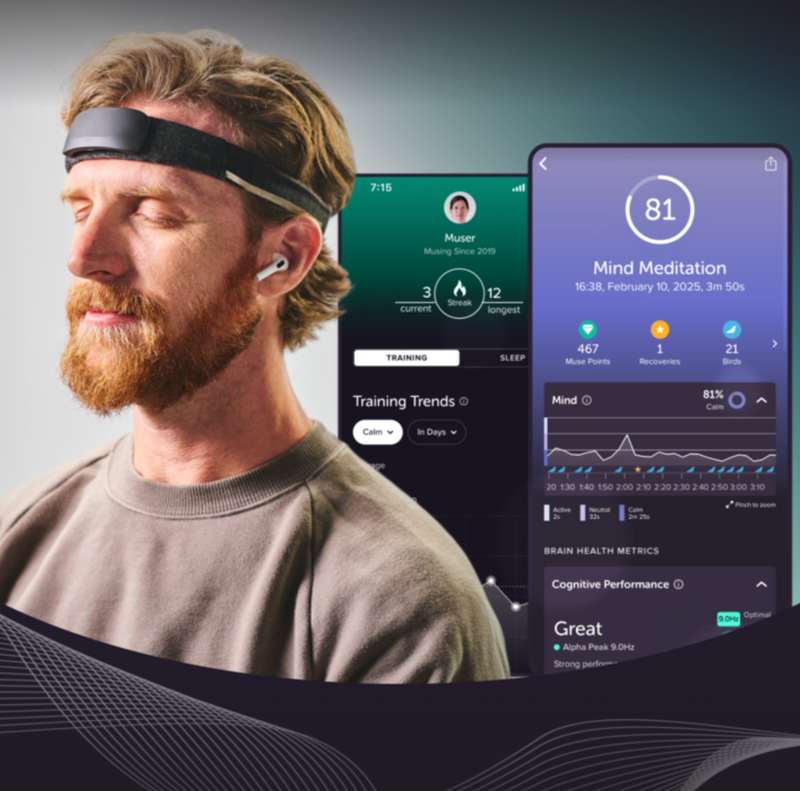
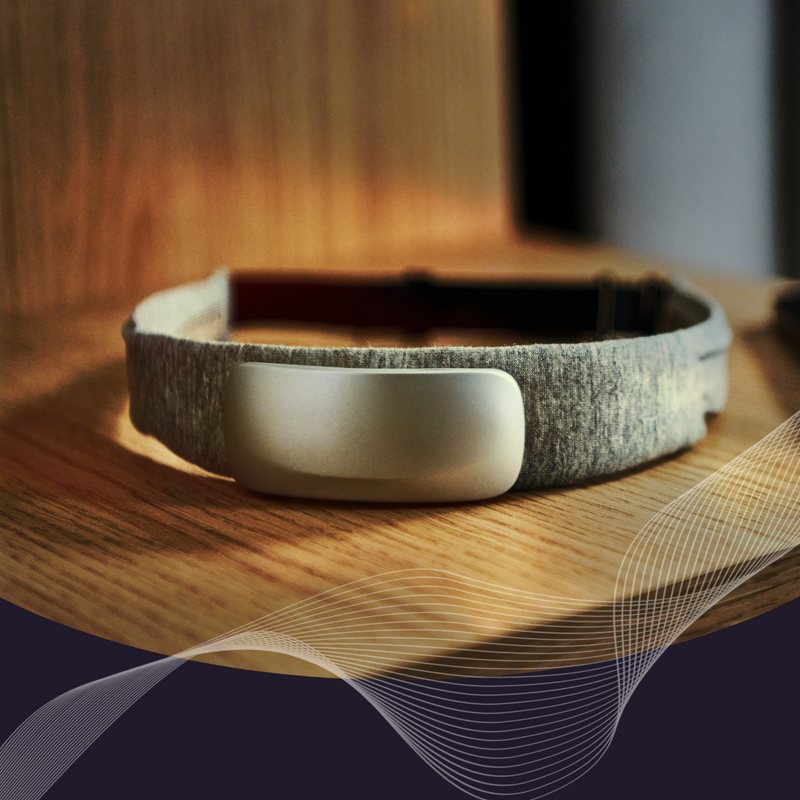
Muse S Athena uses EEG and fNIRS to give realtime feedback during focused-attention practice, cuing you the moment your mind wanders instead of leaving you to guess whether a session worked. That pairs directly with the breath and nervous-system regulation described above: Muse's heart rate and breath biofeedback track the same physiological signals both guests point to as the actual lever on attention.
This isn't just a design idea. In a randomized study comparing six weeks of Muse-based, real-time EEG-feedback mindfulness training against an active control group, participants using the EEG feedback showed a significantly larger improvement in reaction time on a standard attention and executive-function test (the Stroop task) than the control group. Longer-term tracking tools build on this same real-time feedback loop over time, showing how your capacity for sustained attention shifts across weeks, not just within a single session.
Muse is a general wellness product. It is not a medical device and is not intended to diagnose, treat, cure, or prevent any condition. Consult a healthcare provider about attention or focus concerns that affect daily functioning.
What is Untangle?
The Untangle Podcast, hosted by Patricia Karpas, features conversations with psychologists, life coaches, authors, neuroscientists, meditation teachers, and other thought leaders exploring mental wellness, emotional resilience, relationships, and personal growth.
Each episode offers practical tools and science-backed insights to help listeners navigate anxiety, stress, purpose, and everyday life with greater clarity and balance.
Listen to the full episodes:
FAQs
Q: What's the difference between focus and flow?
A: Focus is sustained attention on a task. Flow is a related but distinct state of full absorption where effort disappears. You can be focused without being in flow, but flow generally depends on focus as a foundation.
Q: Why does breathing affect focus?
A: Breath is one of the few processes that runs on both the automatic and voluntary nervous system, giving you direct access to your physiological state. Since attention runs through that same emotional and physiological layer first, slowing your breath is a direct route to better focus, not just a calming side effect.
Q: How do you fix an afternoon mental fatigue slump?
A: Reset the nervous system rather than pushing through with more effort or caffeine. A short breath practice or brief meditation restores access to attention that felt blocked, since the block was physiological, not a lack of capacity. More on brain fog and staying focused.
Q: Can you train yourself to focus better, naturally, without stimulants?
A: Yes. Breath regulation, meditation, physical activity, sleep, and nutrition all compound to support attention over time. None of them work as a single silver bullet on their own.
Q: How do you choose a focus or attention-training approach?
A: Match the approach to the specific state you're addressing (sustained focus, presence, or fatigue), and expect some trial and error. Individual variation in attention systems is the rule, so what works well for one person may need adjusting for another.
Q: Do brain training devices actually work?
A: Yes, when the training relies on real-time feedback rather than generic mental exercises: catching your attention drifting as it happens, not guessing afterward whether a session did anything. A randomized study found six weeks of real-time EEG-feedback training produced significantly larger attention and executive-function gains than an active control group. More on how brain training actually works.