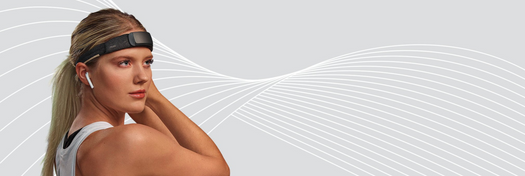
Revolutionizing sleep monitoring: New research demonstrates Muse S Headband offers expert-level sleep assessment at home

In this blog, we highlight the profound impact of sleep on overall health, discuss common sleep disorders, and explain the limitations of current diagnostic methods like polysomnography (PSG). Building on our initial internal research, an independent study published in SLEEP Advances (Lanthier et al., 2025) validated the Muse S Headband directly against simultaneous level 1 PSG, demonstrating 88%-96% accuracy across all sleep stages and a Cohen's Kappa of 0.76, indicating substantial to near-perfect agreement with expert sleep technicians. Using artificial intelligence, the Muse S Headband provides an accessible and convenient solution for sleep monitoring, bridging the gap between medical-grade diagnostics and the need for personal, long-term sleep health management.
The importance of quality sleep and understanding sleep disorders impact on health
Most adults should aim for at least 7 hours of sleep per night. However, more than 1 in 3 American adults fall short of this recommended amount. Getting enough, high-quality sleep is crucial for our physical and mental health. Quality sleep has numerous benefits for our overall well-being, including improved cognitive function, enhanced mood, improved physical health, and better immune system function.
According to Muse’s 2022 Brain Health Report, while Americans ranked sleep as the fourth most important aspect of brain health, it is paradoxically the area in which most Americans struggle when it comes to maintaining a healthy brain.
Without quality sleep, individuals may experience various sleep disorders that can significantly impact their health. Some common sleep disorders include:
- Insomnia: a sleep disorder characterized by difficulty falling asleep, staying asleep, or experiencing non-restorative sleep, which can lead to daytime impairment and fatigue.
- Sleep apnea: a sleep disorder characterized by pauses in breathing during sleep. These pauses, known as apneas, can occur repeatedly throughout the night, disrupting sleep and causing snoring, gasping, or choking episodes.
- Restless leg syndrome (RLS): a neurological disorder characterized by an uncomfortable sensation in the legs, often described as a creeping, crawling, or tingling feeling. These sensations typically occur when the person is at rest, leading to an irresistible urge to move the legs, which can disrupt sleep.
Sleep disorders can have a significant impact for an individual’s health, leading to a range of issues such as:
- Daytime fatigue: a persistent feeling of tiredness and lack of energy during waking hours, even after obtaining an adequate amount of sleep.
- Difficulty concentrating: Sleep disorders can disrupt cognitive function, making it challenging to concentrate, focus, and maintain attention throughout the day.
- Increased risk of chronic conditions: Research has shown that untreated sleep disorders are associated with an increased risk of developing chronic conditions such as obesity, diabetes, cardiovascular diseases, and mental health disorders.

Polysomnography (PSG): The benefits and limitations of the current gold-standard for sleep assessment
Polysomnography, often referred to as a sleep study, is a comprehensive test used to diagnose sleep disorders. This multi-faceted examination involves the simultaneous recording of various bodily functions during sleep, including brain waves, blood oxygen levels, heart rate, breathing, eye and leg movements. The comprehensive nature of polysomnography makes it the gold standard for sleep assessment, as it provides clinicians with the ability to monitor and correlate a wide array of physiological parameters. This offers a holistic view of the patient's sleep state, allowing for the accurate diagnosis of conditions such as sleep apnea and narcolepsy.
However, despite its diagnostic value, polysomnography is not without limitations. Conducting a sleep study typically requires a patient to spend the night in a specialized sleep lab, which can be inconvenient and uncomfortable, potentially disrupting the patient's natural sleep patterns. The setup process can be time-consuming and the presence of numerous sensors can be intrusive for some patients. Additionally, polysomnography can be costly, and may not be covered by all insurance policies, making it less accessible for some individuals.
Furthermore, while polysomnography provides an in-depth snapshot of one night's sleep, it doesn't necessarily capture the variability that can occur in an individual's sleep patterns over time. Some sleep disorders might not be detected if they didn't happen to occur on the night of the study. Therefore, while polysomnography remains a valuable tool in sleep medicine, these limitations must be considered when assessing its applicability to each individual patient's circumstances.
The potential of the Muse S Headband for sleep assessment
Knowing the limitations of polysomnography being disruptive to sleep and not being able to give more data past a single night’s sleep, new sleep assessment tools are required to support the growing number of people suffering from sleep disorders. Looking to find solutions to this challenging problem, the InteraXon research team has conducted a study suggesting that our product, the Muse S Headband, can potentially eliminate the need for an overnight stay at a sleep clinic. Muse S Headband offers expert-level sleep monitoring at home, providing an accessible and convenient solution for sleep assessment. This finding has since been independently confirmed by researchers at the University of Ottawa in a peer-reviewed study published in SLEEP Advances.

Training AI algorithms for sleep stage identification
The foundation of Muse S's sleep monitoring capability lies in AI algorithms trained to automatically identify the different stages of sleep using EEG data from the Muse S Headband, a 4-channel wearable EEG headband that offers a low-cost and powerful means of automatically scoring and analyzing sleep at scale.
In InteraXon's initial study, two expert sleep technicians meticulously labeled 200 recordings from 147 users, assigning a sleep stage to each 30-second window. This labeled dataset was used to train the AI algorithms across 126 training recordings, 33 for validation, and 41 for testing. The results revealed an impressive 86% accuracy in identifying the different sleep stages, with a Cohen's Kappa of approximately 0.78 for the five sleep stages, surpassing the 0.2-0.52 range typical of competing sleep wearables.
Independent validation against level 1 polysomnography
Since that initial study, the Muse S has been independently validated in a peer-reviewed study published in SLEEP Advances (Lanthier et al., 2025). Fifty-six adults underwent simultaneous in-laboratory Muse S recording and level 1 PSG, with PSG scored by a registered technologist who was blinded to the Muse S results, ensuring a rigorous, independent comparison.
Good quality data were available for 47 participants (ages 20–71, 53% female), including a subgroup with sleep-related breathing disorder. The results were compelling. Accuracy ranged from 88% to 96% across all sleep stages, with sensitivity of 79%-92% and specificity of 90%–99%. Full-night Cohen's Kappa reached 0.76, reflecting substantial overall agreement. Agreement was particularly strong for REM sleep and wake, which fell in the near-perfect range, while NREM2 and NREM3 showed substantial agreement. Critically, similar results were observed in the subgroup with sleep-related breathing disorder, suggesting the algorithm holds up even in clinical populations. These results represent a major step forward from the already-strong performance seen in competing wearables, which typically offer only four sleep stages and Cohen's Kappa values of 0.2-0.52.
The benefits of the Muse S Headband: Accessible and accurate sleep monitoring
By accurately tracking sleep stages, the Muse S Headband enables individuals to gain valuable insights into their sleep patterns and lead to identifying potential sleep disorders. Detecting sleep problems early can lead to timely intervention and appropriate treatment, improving overall sleep quality and long-term health outcomes.
Learn more about Muse EEG Sleep Tracking
The implications of this study are far-reaching. By providing an accessible and accurate method of assessing sleep quality, the Muse S Headband has the potential to benefit millions of people worldwide. It offers an alternative to the discomfort and cost associated with overnight stays at sleep clinics, allowing individuals to monitor their sleep patterns conveniently at home. Widespread access to sleep assessments can lead to early detection and treatment of sleep problems, enhancing overall well-being. Furthermore, with a more precise understanding of their sleep patterns, individuals can make informed decisions to improve sleep hygiene and explore more effective treatments for better sleep quality.
In addition to using sleep tracking devices like the Muse S Headband, there are several tips individuals can follow to improve sleep quality. Maintaining a consistent sleep schedule, creating a relaxing bedtime routine, ensuring a comfortable sleep environment, practicing good sleep hygiene, and incorporating meditation or mindfulness practices into your daily routine can be beneficial for promoting healthy sleep patterns.
Advancements in sleep assessment with Muse
The publication of an independent, peer-reviewed validation study marks a significant milestone in establishing the Muse S as a credible, clinical-grade sleep monitoring tool. While further research is encouraged to validate performance across more diverse populations (including varying ages, neurological conditions, and sleep profiles) the evidence to date is strong and growing. The Muse S Headband's ability to provide expert-level sleep assessment at home has the potential to make a substantial impact on public health, expanding research capacity and clinical applications well beyond the constraints of the traditional sleep lab.
Unlock the Future of Sleep Diagnostics
Download our in-depth whitepaper to learn how advanced AI and EEG technology are improving sleep diagnostics, leading to more accurate, efficient, and scalable insights.
- Leverage AI-driven EEG insights to enhance sleep disorder diagnosis
- Discover cutting-edge research on AI’s role in identifying biomarkers
- Boost clinical outcomes with advanced neurotechnology applications