TL;DR
-
ADHD symptoms are not constant: estrogen and progesterone fluctuations across your menstrual cycle directly affect dopamine, the neurotransmitter that controls attention and impulse regulation
-
The follicular and ovulatory phases (roughly weeks 1-2) tend to bring improved focus, motivation, and emotional stability
-
The luteal and premenstrual phases (roughly weeks 3-4) are when inattention, impulsivity, and emotional dysregulation typically peak, often most severely in the 1-3 days before your period
-
Tracking both your cycle and your ADHD symptoms together over 2-3 months reveals predictable patterns you can plan around
-
Phase-aware task scheduling: matching demanding work to high-estrogen phases and routine tasks to low-estrogen phases, is one of the most practical management strategies available
-
Non-pharmaceutical tools including neurofeedback wearables, structured routines, and productivity scaffolding can meaningfully reduce symptom impact without medication adjustment
-
Any medication timing changes should always be discussed with a healthcare provider
ADHD symptoms fluctuate across the menstrual cycle because estrogen (peaks in the follicular and ovulatory phases) directly supports the dopaminergic pathways involved in attention and impulse control. When estrogen drops in the luteal and premenstrual phases, dopamine availability falls and symptoms like inattention, emotional dysregulation, and impulsivity typically worsen. If you've noticed that some weeks feel almost manageable and others everything falls apart at once, that's not a motivation problem. It's actually a trackable pattern, and once you know what to look for, it's a predictable one.
How do female hormones affect the ADHD brain?
ADHD involves differences in dopamine and norepinephrine signaling, where the brain's attention and reward pathways don't fire with the same consistency as in neurotypical brains. What's less commonly discussed is that estrogen directly supports those same dopaminergic pathways. When estrogen rises, dopamine availability tends to improve. When it drops, so can your ability to focus, regulate emotions, and stay organized.
Estradiol
The primary form of estrogen
Estradiol fluctuates throughout the menstrual cycle and has a meaningful impact on brain function, particularly in the prefrontal cortex. This is the region responsible for executive function: the umbrella term for planning, organization, impulse control, and the ability to shift focus. Research suggests estrogen supports the dopaminergic and noradrenergic pathways, the brain's attention and motivation systems, essential for these functions, and that inattention may relate directly to estrogen fluctuations.
Progesterone
A key reproductive hormone that rises in the luteal phase after ovulation
As estrogen falls in the late luteal phase, dopamine availability tends to drop and ADHD symptoms frequently intensify. Progesterone rises during this window too, but the symptom shift is most closely tied to the estrogen decline. Irritability, forgetfulness, and impulsivity are common in this window. Low estradiol combined with elevated progesterone is consistently associated with heightened ADHD symptom burden.
How do ADHD symptoms change throughout your menstrual cycle?
ADHD symptoms typically improve in the follicular and ovulatory phases when estrogen is high, and worsen in the luteal and premenstrual phases when estrogen falls and progesterone rises. Here’s a table for the overview:
|
Phase |
Hormone pattern |
Cognitive changes |
Emotional changes |
Overall |
|
Follicular Days 1-13 |
Estrogen rising, progesterone low |
Improved focus Higher motivation Easier task initiation |
More stable mood Lower irritability |
Easier |
|
Ovulatory Day 14 (approx.) |
Estrogen peaks |
Peak productivity Best executive function Sustained attention |
Positive outlook Higher confidence |
Easiest |
|
Early / mid Luteal Days 15-24 (approx.) |
Progesterone high, estrogen declining |
Inattention increases Forgetfulness Slower processing |
Irritability Lower frustration tolerance |
Harder |
|
Late luteal / Premenstrual Days 25-28 (approx.) |
Estrogen and progesterone both drop sharply |
Peak inattention Executive dysfunction Decision fatigue |
Mood instability Heightened reactivity Anxiety |
Hardest |
|
Menstruation Days 1–5 |
Hormones at lowest, beginning to rise |
Varies by person Gradual improvement |
Possible relief Physical symptoms may compound |
Variable |
*cycle length varies; day ranges are illustrative
The follicular phase (day 1 of menstruation to ovulation) tends to be the clearest window for many people with ADHD. Estrogen rises steadily, and focus feels more accessible, motivation is higher, and executive function tends to be easier to sustain.
Around ovulation, estrogen peaks. For many people with ADHD this corresponds to a sense of peak productivity and capability. Complex tasks, creative work, and high-demand obligations tend to feel most manageable here.
The luteal phase (ovulation to start of menstruation) is where things typically shift. For many people with ADHD, luteal phase ADHD symptoms are the most disruptive of the entire cycle. Progesterone rises while estrogen begins to fall, and emotional dysregulation and impulse control tend to worsen 1-3 days before menstruation. Many people also report their ADHD medications feel less effective in this window, and symptom severity is often most intense premenstrually. Premenstrual symptoms may overlap with PMDD (premenstrual dysphoric disorder), the condition involving more intense mood and cognitive disruption in the luteal phase that frequently co-occurs with ADHD. If luteal-phase mood symptoms are severe or significantly disrupt daily life, it's worth raising with a healthcare provider, as PMDD is a recognized and treatable diagnosis.
For some, menstruation itself brings relief as hormones begin to reset. For others, the combination of low estrogen and physical symptoms means difficulties persist into the first few days of the new cycle.

How to track your menstrual cycle and ADHD symptoms together
Tracking your menstrual cycle and ADHD symptoms side by side can reveal patterns that allow you to plan tasks and manage your workload more proactively, rather than being caught off guard every month. Here's a guide on how to start:
-
Start on day 1 of your next cycle: day 1 is the first day of full flow
-
Log your cycle phase daily: follicular, ovulatory, luteal, or menstruation
-
Rate your symptoms each day across four key areas: focus, emotional regulation, impulse control, and energy. A simple 1-5 scale works well
-
Note what helped or made things harder: this could be sleep quality, stress, exercise, or anything else that felt relevant
-
Review after 2-3 cycles to identify your personal pattern
Both dedicated apps or even a notes app can work. What matters more than the tool is consistency. Once you have a few months of data, you'll likely see clear patterns, and those patterns become a planning resource.
How to plan your work around your menstrual cycle
Once you know your cycle pattern, you can start aligning your workload to your brain's natural rhythm rather than fighting it.
|
Cycle phase |
Best for |
|
Follicular |
Strategic planning, learning new material, creative projects, difficult conversations, building new habits |
|
Ovulatory |
High-stakes work, complex problem-solving, presentations, anything requiring peak sustained attention |
|
Early / mid Luteal |
Administrative tasks, emails, routine work, low-decision-load activities |
|
Late luteal / Premenstrual |
Repetitive tasks, rest, gentle movement, reducing commitments where possible |
During lower-estrogen phases, external scaffolding becomes more important than ever. These tools can help compensate for the executive function dip:
-
Detailed to-do lists: break tasks into the smallest possible steps to reduce decision load
-
Calendar blocking: schedule specific tasks into time slots rather than working from a general list
-
Reminders and alerts: offload memory demands to your phone or app
-
Body-doubling: working alongside someone (in person or virtually via tools like Focusmate) to maintain accountability and focus
Hormonal shifts are real, but they don't have to dictate your productivity. The more you understand your own cycle, the more you can adapt proactively, protect your output during harder phases, and make the most of your stronger ones.

What are the best non-pharmaceutical tools for managing ADHD symptom changes?
For many people, the goal is to manage ADHD symptom variability without relying solely on medication, especially during phases when medication may feel less effective or when side effects interact with menstrual symptoms. Here's a breakdown of the most effective non-pharmaceutical options:
Can neurofeedback help with cycle-related ADHD symptoms?
Neurofeedback is a process in which users receive real-time feedback about their brain activity to train focus, calm, and self-regulation. Rather than guessing at your mental state, you're working with objective data from your own brain, which makes it particularly useful during phases when symptoms are less predictable.
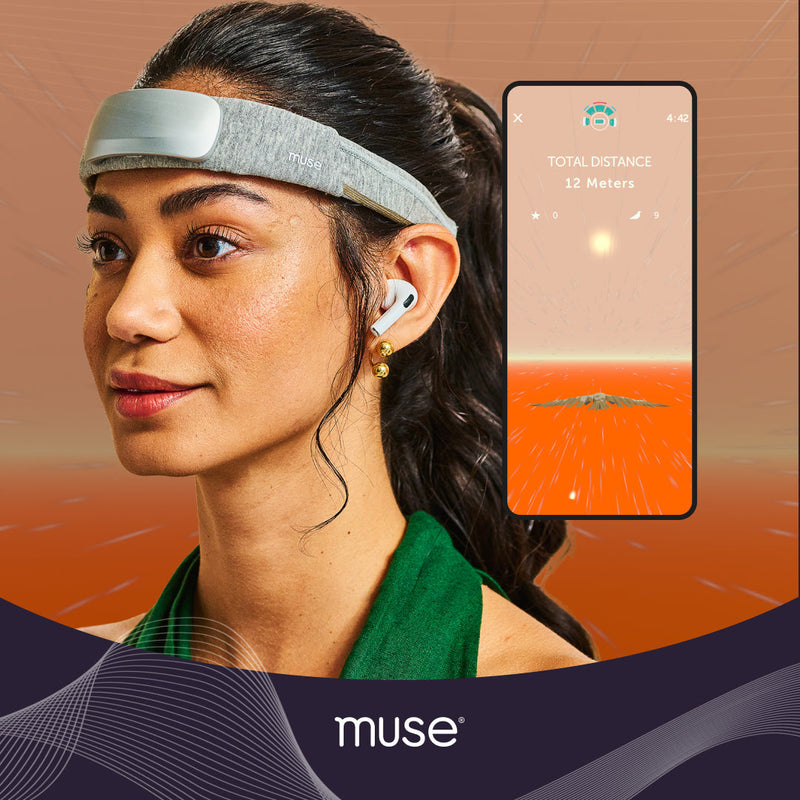
The Muse headbands use EEG (electroencephalography) to measure real-time brain activity and deliver audio feedback during focused attention or meditation sessions. Muse S Athena adds fNIRS (functional near-infrared spectroscopy), which measures blood oxygenation in the prefrontal cortex (the region most implicated in executive function) giving a more complete picture of cognitive effort and mental endurance.
This dual-sensor approach is particularly relevant for ADHD. The prefrontal cortex is the area most affected by both ADHD and hormonal fluctuation. The fNIRS technology measures blood oxygenation in this region in real time, revealing how much cognitive effort your brain is actually sustaining during a session. This is what powers Muse's Mental Strength Training: rather than guessing at mental endurance, you're training it directly with objective data. Over time, regular neurofeedback practice may help build more consistent attention and emotional regulation, the skills that are hardest to access when hormones are working against you.
Muse has been used in 200+ peer-reviewed studies across focus, stress, sleep, and cognitive performance. Research has found that participants using Muse headband for mindfulness showed improved attention regulation and cognitive performance, and that Muse’s EEG-based neurofeedback can support emotional regulation through real-time brain activity feedback.
Muse may help with symptoms of ADHD like the inability to stay focused. It is not a medical device and is not intended to diagnose or treat any condition.
Sleep is also worth flagging here: disrupted sleep is a known ADHD symptom amplifier, and sleep quality tends to worsen in the luteal phase. Muse's Sleep Assist and Deep Sleep Boost features may help moderate the cascade of effects that poor sleep has on attention and emotional regulation.
What other neurofeedback and brain training devices are available?
Several other neurofeedback and brain training platforms offer EEG-based cognitive training for ADHD support. When comparing options, look for:
-
Whether the device uses direct EEG measurement rather than app-only cognitive tasks
-
The granularity of real-time feedback
-
Whether it has been validated in independent published research
-
Whether sessions adapt to your individual brain patterns rather than applying a generic program
What wearables can help adults with ADHD stay on task?
Smartwatches with customizable alerts, haptic reminders, and time-blocking integrations can be effective for managing ADHD-related time blindness and task-switching especially during high-symptom phases when external scaffolding matters most. HRV monitoring and stress tracking features can also flag when your nervous system is in a state that's likely to make focus harder, prompting a break or a regulation strategy before things deteriorate.
What productivity tools work best for hormonal ADHD symptom variability?
Digital planners, time-blocking apps, and body-doubling tools work best when synced with your cycle tracker, creating a system that adapts to your monthly pattern. During the luteal phase especially, pre-built structures: template to-do lists, pre-scheduled routines, automated reminders, reduce the cognitive load of planning itself.
How to choose a device for emotional regulation and ADHD?
If you're evaluating a neurofeedback or brain training device for ADHD and cycle-related symptom management, here's what to look for:
|
Feature |
Why it matters |
|
Direct EEG measurement |
Measures brain activity directly rather than inferring mental state from movement or heart rate. It is far more relevant for attention and emotional regulation |
|
Real-time feedback |
Allows you to train your brain state in the moment, not just review data after the fact |
|
Multi-sensor insight (EEG + fNIRS) |
Combining electrical brain activity with blood oxygenation data gives a complete picture of cognitive effort and endurance, particularly useful during high-symptom phases |
|
Independent research validation |
Look for peer-reviewed studies from independent institutions, not just manufacturer claims |
|
Personalization |
Sessions that adapt to your individual brain patterns over time produce better results than generic programs. This is especially important given the baseline variability in ADHD |
|
App ecosystem and integration |
A device is only as useful as the habit it supports. Look for intuitive apps, progress tracking, and ideally integration with cycle or health tracking platforms |
The Muse S Athena is built around all of these. It combines proprietary 4-channel EEG with fNIRS (the only consumer wearable to do both) delivering real-time audio feedback on your mental state during focus and meditation sessions. Its Mental Strength Training program uses fNIRS to measure blood flow to the prefrontal cortex in real time, training cognitive endurance and attention directly. Sessions adapt to your individual brain patterns over time, and the Muse app tracks progress across sessions so you can observe trends in focus, calm, and mental resilience.
Start your mental fitness training today
Should you adjust your ADHD medication based on your menstrual cycle?
Some people with ADHD report benefit from timing or dosage adjustments in the premenstrual period, though controlled research in this area remains limited. It's also worth knowing that certain ADHD medications may feel less effective or interact with menstrual symptoms (including cramps and heavier bleeding) for some individuals.
The most useful thing you can do before that conversation is arrive with data. Cycle-tracked symptom logs move the discussion from subjective ("I feel worse some weeks") to objective ("here's a consistent pattern across three cycles"). That gives your prescriber something concrete to work with.
A few things worth raising with your provider:
-
Which phases your symptoms are hardest, and by how much
-
Whether your current medication feels less effective at certain points in your cycle
-
Any physical side effects that seem to worsen around menstruation
-
Whether timing adjustments, rather than dose changes, might be worth trialling
Any medication changes should always be made under medical supervision.
What is still unclear about hormones and ADHD?
The science here is growing but still early. Most existing studies are relatively small, cross-sectional, or reliant on self-report. This means patterns are visible but causality is hard to confirm. What researchers are calling for are larger longitudinal studies: research that follows participants across multiple cycles over extended periods, using validated symptom scales and objective biological markers alongside subjective reporting.
Three specific gaps stand out:
-
Hormone-timed sampling: most studies don't control precisely for cycle phase, making it hard to isolate which hormonal shifts drive which symptom changes
-
Diverse populations: existing research skews toward narrow demographics and doesn't yet reflect the full range of people who menstruate and have ADHD
-
Device-based intervention data: there is a growing call for studies that combine biological markers, cognitive testing, and wearable-based interventions to test what actually moves the needle
Consumer-grade wearables capable of collecting continuous brain data at home are making this kind of research more feasible than ever, and the data gathered from daily use at scale may ultimately be what closes these gaps. At Muse, we're committed to being part of that effort, contributing to the growing body of research that helps people with ADHD better understand and manage their brain health across every phase of life.
FAQs
Q: Can my menstrual cycle make my ADHD symptoms worse?
A: Yes. Many people with ADHD experience a noticeable increase in inattention, impulsivity, and emotional dysregulation during the late luteal and premenstrual phases. This is directly linked to falling estrogen levels, which reduce dopamine availability. Dopamine is the neurotransmitter most responsible for attention and impulse regulation.
Q: Why do ADHD symptoms spike before my period?
A: In the premenstrual window, estrogen drops sharply while progesterone remains elevated. Since estrogen supports the brain pathways involved in attention and impulse control, this shift reduces dopamine availability and directly worsens ADHD symptoms. Many people also report their medication feeling less effective during this phase.
Q: How can tracking my menstrual cycle help manage ADHD symptoms?
A: Tracking your cycle and ADHD symptoms together over 2–3 months reveals which phases are harder, which are easier, and what strategies help most. That pattern becomes a practical monthly planning tool, letting you schedule demanding work and recovery time around your brain's actual rhythm.
Q: Are there effective non-medication strategies for cycle-related ADHD symptom changes?
A: Yes. Neurofeedback, phase-aware task scheduling, structured routines, sleep support, and mindfulness have all shown benefits for managing ADHD symptom variability across the cycle. These work best as complements to, not replacements for, any existing treatment plan you have with your healthcare provider.
Q: Should I adjust my ADHD medication based on my menstrual cycle?
A: Some people benefit from timing or dose adjustments in the premenstrual phase, but controlled evidence is limited. Bring cycle-tracked symptom data to your prescriber. It moves the conversation from subjective impressions to a concrete, observable pattern. Any changes should always be made under medical supervision.
Q: Can a wearable device help manage ADHD symptoms during difficult cycle phases?
A: Yes. Neurofeedback wearables like Muse may help with symptoms of ADHD like the inability to stay focused, particularly during high-symptom phases. EEG-based neurofeedback is designed to train attention and emotional regulation, the two areas most affected by hormonal fluctuation. Evidence is still developing, and results vary by person.
Q: What is the most effective device for managing ADHD distraction without medication?
A: Neurofeedback tools let you train attention and self-regulation using real-time feedback from your own brain activity, which some people find helpful for managing focus during high-symptom phases. Muse S Athena combines EEG with fNIRS to train focus and cognitive endurance through real sessions. Muse may help with symptoms of ADHD like the inability to stay focused. It is not a medical device and is not intended to diagnose or treat any condition.
Muse is not a medical device and is not intended to diagnose or treat any condition. Always consult a healthcare provider before making changes to your ADHD treatment plan.