Work stress and everyday stress are two different problems that need different solutions. Most advice treats them as the same thing, which is a large part of why it rarely works.
Two recent Untangle guests have been thinking carefully about what actually does. Amy Leneker, burnout expert and author of Cheers to Monday, focuses on the stress that lives at work: how it builds unnoticed, how organisations make it worse without meaning to, and what genuine recovery looks like. Dr. Elisha Goldstein, psychologist and author of Tiny Shifts, focuses on the stress that lives inside us: chronic, physiological, quietly chipping away at our health over time.
Together, they cover the full picture. And the starting point, both agree, is knowing which kind you're dealing with.
TL;DR
|
Type of Stress |
How to Cope |
|
Work stress (Amy Leneker, Ep. 562) |
Comes in five distinct types, each needing a different response. The Unstressing Method (See, Sort, Solve) and the RIGHT framework help you identify and act on what's actually yours to carry. |
|
Everyday stress (Dr. Elisha Goldstein, Ep. 571) |
Often runs below conscious awareness and lives in the body first. The Four Rs (Recognize, Release, Refocus, Reinforce) work by starting with physical release before any cognitive reframing. |
|
What both agree on |
Joy is not a reward for surviving stress. It's one of the most practical tools for building resilience against it. |
How to deal with stress at work?
Burnout Recovery Tools: Reduce Stress and Build More Joy In Your Life. With Amy Leneker. - Ep. 562
Most people who burn out don't see it coming. Not because the signs weren't there, but because they'd learned to read them as proof they were working hard enough. Amy Leneker was one of them, over a hundred panic attacks in a single summer, after months of overriding every warning signal her body sent.
The wake-up moment wasn't dramatic. It was a question on a form in her doctor's waiting room: What do you do for fun? She had no answer for herself. Somewhere along the way, she had quietly disappeared from her own life.
"I had been getting warning signs for months, if not years. But I just kept going until my body finally said enough." — Amy Leneker, Ep. 562
What are the early signs of burnout?
|
Sign |
What it can look like |
|
Physical |
Persistent fatigue, headaches, disrupted sleep, frequent illness |
|
Emotional |
Feeling detached, cynical, or like nothing matters much |
|
Behavioural |
Withdrawing from people, overriding rest, losing track of what you enjoy |
|
Cognitive |
Difficulty concentrating, forgetting things, decision fatigue |
The tricky part, as both guests point out, is that high achievers tend to reframe these signs as normal, even as badges of effort.
Practical takeaway: Stress rarely announces itself loudly. Pick one moment today and notice. Where are you holding tension? What have you been quietly overriding? Awareness doesn't fix everything, but nothing else works without it.
Are there different types of work stress?
One of the biggest reasons stress management advice fails people at work is that it treats all work stress as the same problem. It isn't. Amy Leneker's research led her to identify five distinct types, and knowing which one you're dealing with changes everything about what you can actually do.
The five types of work stress
|
Type |
What it sounds like |
|
Too much, too little time |
"I can't keep up. There aren't enough hours." |
|
Uncertainty |
"I don't know what's coming. I can't plan for anything." |
|
Interpersonal tension |
"Something is off with a colleague or my manager." |
|
Unexpected disruption |
"Everything just changed and I wasn't ready." |
|
Structural and power dynamics |
"The system itself is the problem. I have no control." |
Her framework for working through them is called the Unstressing Method: See, Sort, Solve.
Step 1 - See: means writing down everything contributing to your stress. No filtering, no editing. What's running in the background of your mind is already real. Getting it onto paper doesn't make it worse. It makes it visible.
Step 2 - Sort: means running each stressor through two questions: does this actually matter to me, and do I have any control over it? The answers tell you which of the five types you're dealing with.
Step 3 - Solve: means matching your response to reality. Sometimes that's asking for help. Sometimes it's accepting something without trying to fix it. Sometimes it's taking direct action. The key is that you're no longer treating five different problems as one.
"The way we are trying to manage stress at work is causing more stress. Well-intentioned leaders are doing all of these things and creating more stress for their teams." — Amy Leneker, Ep. 562
She's seen this play out in mediation after mediation: a manager removes a project from an overwhelmed employee to lighten their load, without ever asking which parts of their work they actually value. The one project that brought them joy is suddenly gone. The stress doubles.
Practical takeaway: Next time you feel overwhelmed at work, write down everything contributing to it. Then ask two questions about each item: does this matter to me, and do I have control over it? What falls outside both circles is probably not yours to carry.

How to deal with work stress in the moment
Knowing your stress type is the first move. The second is having something to reach for when you're right in the middle of it: when the conversation goes sideways, the pressure spikes, or a decision needs to be made and your head is already full.
Leneker's tool for this is the RIGHT framework: five questions that create enough of a pause to respond with intention rather than react from inside the stress.
The RIGHT framework
The RIGHT framework is a five-step sequence of questions designed to widen your field of vision when stress has narrowed it, so you respond to the situation rather than react from inside it.
|
Step |
The question to ask |
|
R: Reframe |
Is this a threat, or a challenge I can work with? |
|
I: Identify your role |
What part of this is actually mine to own? |
|
G: Ground in your values |
What matters most to me in this situation? |
|
H: Hold yourself accountable |
What would I want to have done, looking back? |
|
T: Take aligned action |
What is the one step I can take right now? |
The goal is not to think your way into positivity. Stress narrows our field of vision. The RIGHT framework widens it just enough to act from a clearer place.
What makes this practical is that you don't need to run all five steps every time. In a heated moment, just the first one: is this a threat or a challenge, is often enough to shift something.
"As long as you have some say in people's livelihood, you can't take off your leader hat. That power is always there." — Amy Leneker, Ep. 566
Practical takeaway: Next time pressure spikes at work, try just the R before you do anything else. Ask whether what you're facing is a genuine threat or something you can actually work with. That single question won't dissolve the stress, but it changes what you do with it.

How to deal with everyday stress
How Emotional Health Impacts Longevity (and how to Optimize it!). With Elisha Goldstein - Ep. 571
Dr. Elisha Goldstein opens with a deceptively simple observation: most of us are so immersed in low-grade chronic stress that it simply feels like normal life. He uses the image of fish being asked about water. What water? This is just how things are.
The fractured attention, the ambient unease, the reaching for the phone before you've even gotten out of bed. None of it feels like stress. It just feels like Tuesday.
But the body is keeping score regardless. Goldstein draws a direct line between unmanaged emotional stress and long-term physical health: higher cortisol, systemic inflammation, disrupted sleep, and accelerated cellular aging. Genes, he notes, account for roughly a quarter of how long and how well we live. The rest comes down largely to how we handle the ordinary moments of stress that make up a day.
"Living with this low-grade chronic stress is sort of just normal. We're not consciously thinking about it, but this is just the world we're living in." — Dr. Elisha Goldstein, Ep. 571
What does chronic everyday stress actually feel like?
|
Sign |
What it can look like |
|
Mental |
Racing thoughts, difficulty switching off, constant low-level worry |
|
Physical |
Tension in jaw, shoulders or chest, fatigue that sleep doesn't fix |
|
Emotional |
Irritability, emotional flatness, feeling vaguely overwhelmed without a clear cause |
|
Behavioural |
Reaching for distractions, difficulty being present, losing enjoyment in things you used to like |
Why you can't think your way out of it
Most stress advice is cognitive: reframe, refocus, look on the bright side. Goldstein's work cuts through this with a crucial neuroscience point. When you're in an active stress response, blood flow shifts away from the prefrontal cortex: the reasoning, decision-making part of the brain. You are literally less equipped to think clearly in the moment you most need to.
This is why his Four Rs are ordered the way they are.
The Four Rs framework
The Four Rs are a four-step sequence designed to interrupt a stress response by starting with the body before attempting anything cognitive, because that's the only order that actually works.
|
Step |
What it involves |
|
Recognize |
Notice that you're in a stress response: name what's happening in your body and mind |
|
Release |
Soften physically before doing anything else. Slower exhale, dropping the shoulders, unclenching the jaw |
|
Refocus |
From a calmer baseline, redirect attention to what actually matters right now |
|
Reinforce |
Build the habit by repeating it: the more you practise the sequence, the faster it works |
The release step is the one most people skip. It feels too small to matter. But breathing out slightly longer than you breathe in sends a genuine physiological signal to the brain that the threat has passed. Cortisol begins to drop. The thinking brain comes back online. Only then does refocusing actually work.
"Rather than redressing your thoughts, start with the body and begin to soften, which will start to cool the thinking down." — Dr. Elisha Goldstein, Ep. 571x
Practical takeaway: Next time you feel the stress rising, try the release step before anything else. Breathe in for four counts, out for six. Let your shoulders fall on the exhale. Do it twice. You're not stalling, you're restoring the capacity to actually respond well.
Can joy actually help with stress?
This is where Goldstein lands, and it's worth sitting with. Joy, he argues, is not the reward for getting through stress. It's one of the most effective tools for building resilience against it.
His version of this is the joy break: a small, deliberate interruption when the stress loop is running too hot for anything else to get through. A walk. Something that makes you laugh. Hands in the dirt. Happiness acts as a genuine pattern interrupt that shifts the nervous system enough to create breathing room for everything else.
"Rather than waiting for stress to lift before letting yourself feel good, you can use moments of joy to actively lower the stress." — Dr. Elisha Goldstein, Ep. 571x
Practical takeaway: Think of one thing that reliably shifts your mood: small, accessible, something you could do today. Schedule it before you need it, not as a treat for surviving the week. Joy used this way is less an indulgence and more a maintenance tool.
What do work stress and everyday stress have in common?
Across two very different conversations, the same ideas keep surfacing.
-
Stress accumulates. Whether it's the workload that never quite empties or the ambient unease that follows you home, both guests describe a version of stress that builds quietly, below the threshold of conscious attention, until the body makes it impossible to ignore.
-
The body is always the starting point. Leneker's moment of reckoning came through physical collapse. Goldstein's entire framework begins with releasing physical tension before attempting anything cognitive. In both cases, the body knew before the mind caught up.
-
Thinking harder is not the answer. The RIGHT framework and the Four Rs share the same underlying logic: create a pause, get out of the reactive state, then respond. Neither guest is asking you to think positively. They're asking you to think clearly, and that requires slowing down first.
-
Individual tools matter, but so does the system. Personal frameworks only go so far in an environment that generates stress faster than people can recover. Both guests point, in their own way, to the importance of the conditions around us: the culture we work in, the relationships we maintain, the boundaries we model for others.
-
Joy is not optional. Both Leneker and Goldstein return to this. Not as a soft idea but as a practical one. Moments of genuine connection, rest, and pleasure build the resilience that makes everything else possible.

Can a wearable actually help with stress? Here's what science says about Muse.
Both Amy Leneker and Dr. Elisha Goldstein point to the same challenge: stress lives in the body before the mind catches up. The tools that work are the ones that start there too. That's exactly where Muse comes in.
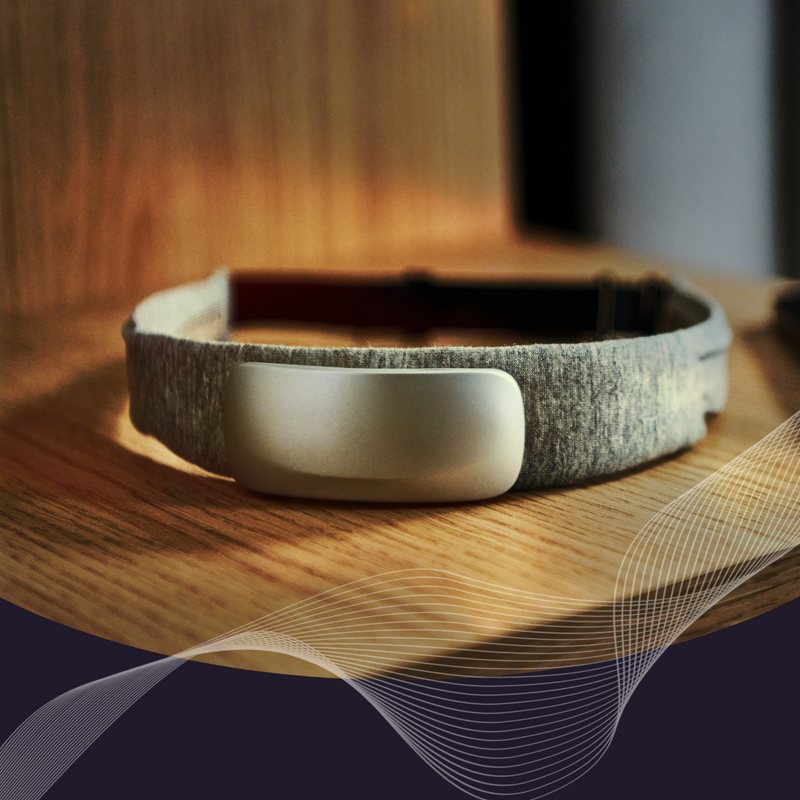
Muse S Athena is a brain-sensing wearable that uses EEG and fNIRS technology to give you real-time feedback on what your brain and body are actually doing during meditation and mental fitness training. For stress in particular, that distinction matters.
How can Muse help with stress?
|
Feature |
How it helps with stress |
|
EEG biofeedback |
Tracks your brain's calm, neutral, and active states in real time, so you can learn to shift into calm more reliably |
|
Heart rate biofeedback |
Shows how your heart responds to stress and trains it to slow down through guided sessions |
|
Breath biofeedback |
Uses PPG and gyroscope sensors to guide slower, calmer breathing, the same mechanism Goldstein's Release step relies on |
|
Body stillness tracking |
Reduces physical tension, the first signal of stress that most people miss |
|
Mental Strength training |
fNIRS-powered eyes-open sessions that build cognitive endurance and focus over time |
What does the research say?
This isn't anecdotal. Muse has over 200 peer-reviewed studies behind it, more than any other consumer brain-sensing wearable. The stress research is particularly strong:
A 2023 study published in the Journal of Primary Care and Community Health, conducted with Mayo Clinic-affiliated researchers, found that 40 healthcare professionals using Muse over 26 weeks showed a 54% reduction in burnout, significant improvements in resilience, quality of life, and cognition, and 91.9% reported feeling more relaxed after sessions.
For everyday stress specifically, the kind Dr. Goldstein describes as running below conscious awareness. Muse gives you something most tools can't: objective data on your own nervous system. You stop guessing whether the practice is working. You can see it.
How does Muse build mental endurance over time?
Stress resilience isn't just about managing difficult moments. It's about building the capacity to recover from them faster. Muse's Mental Strength Training, powered by fNIRS, tracks how much cognitive energy your brain is using during focus sessions and trains it to sustain effort with less strain over time, the mental equivalent of building stamina.
The Brain Recharge Score and Alpha Peak tracking (available on Premium) give you a longer view: how well your brain is recovering between sessions, and whether your baseline stress level is shifting.
Both the frameworks in this blog ask you to pay closer attention to what your body is doing under stress. Muse makes that attention precise.
Get Athena and try EEG-guided meditation today.
Ready to go deeper?
Both episodes are available now on the Untangle podcast. Follow us for weekly conversations with psychologists, neuroscientists, and thought leaders on how to live with more clarity, resilience, and calm.
Listen on Spotify Listen on Apple Podcasts
FAQs
Q: What is the difference between work stress and everyday stress?
Work stress tends to have an identifiable source: workload, uncertainty, interpersonal tension, or structural issues in an organisation. Everyday stress is often more diffuse: a chronic low-grade activation of the nervous system that doesn't have one clear cause. Both are real, both affect health, and each responds better to different tools.
Q: What are the early signs of burnout?
Physical fatigue that sleep doesn't fix, emotional detachment, difficulty concentrating, and losing interest in things that used to matter. The tricky part is that high achievers tend to reframe these signs as normal, which is often how burnout goes unnoticed until it becomes a crisis.
Q: Why do I feel stressed even when nothing specific is wrong?
This is what Dr. Elisha Goldstein calls low-grade chronic stress: a baseline activation of the stress response that becomes so familiar it no longer registers as stress. It shows up as restlessness, difficulty being present, or a vague sense of unease. The Four Rs: Recognize, Release, Refocus, Reinforce, are designed specifically for this kind of stress.
Q: How do I recover from burnout?
Amy Leneker's Unstressing Method: See, Sort, Solve, is a practical starting point. Writing stressors down, identifying which type they are, and matching your response to the reality rather than treating everything as one undifferentiated problem. Recovery also requires looking honestly at the environment generating the stress, not just the individual experiencing it.
Q: Does chronic stress really affect long-term health?
Yes. Genes account for roughly a quarter of how long and how well we live. Chronic stress accounts for much of the rest: raising cortisol, driving inflammation, disrupting sleep, and accelerating cellular aging. Dr. Goldstein's view: emotional health is preventative medicine.
Q: Can joy actually help with stress?
Yes, and it's not a soft claim. Genuine moments of connection, rest, and pleasure actively build resilience against future stress. A joy break, as Goldstein calls it, shifts the nervous system enough to create breathing room. It's a maintenance tool, not a luxury.